Categories
Research Updates

Transducers 2025


The Dynamic Microsystems Lab had a great time participating in Transducers 2025 at the Hyatt Regency Orlando this past summer! Our team presented research spanning MEMS resonators, Rosen transformers, and acoustoelectric loss isolation, contributing to important conversations in the field of microsystems and transducer technologies.
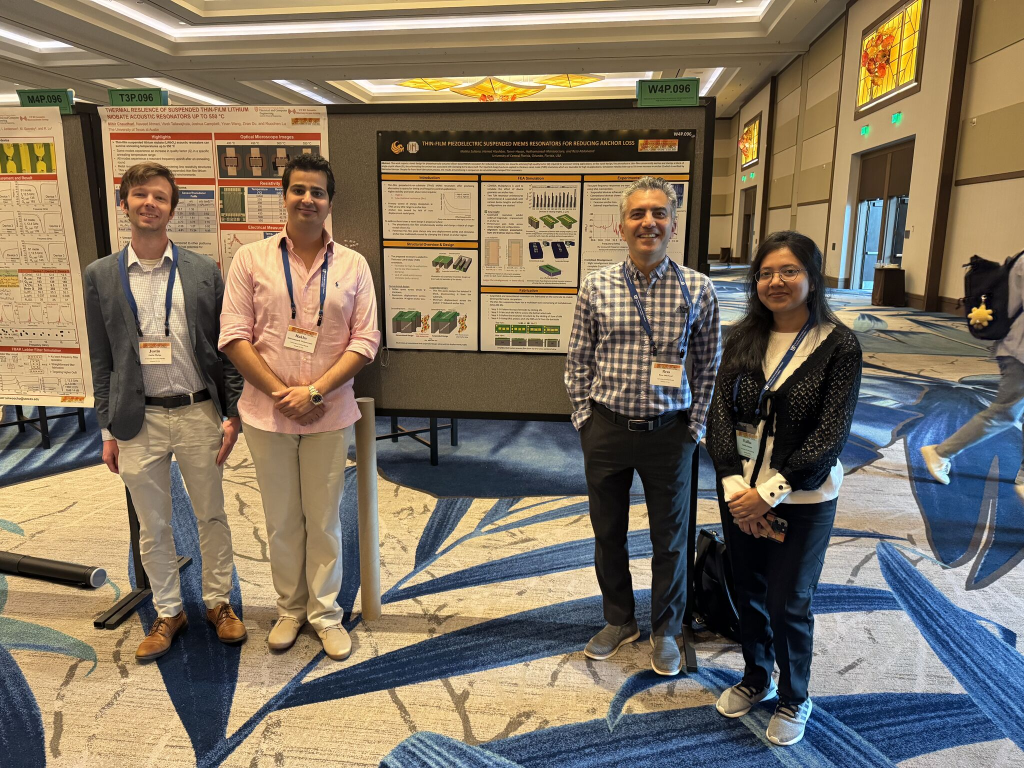

Congratulations to:

– Dr. Hakhamanesh Mansoorzare, who presented the poster: “A Novel Testbed for Acoustoelectric Loss Analysis in Lamb Wave Lithium Niobate on Silicon Delay Lines”.
– Maliha Sultana, who presented the poster: “Thin-Film Piezoelectric Suspended MEMS Resonators for Reducing Anchor Loss”.
– Dr. Justin Phelps sharing work in his talk, “Sustained AC Plasma Generation at Low Voltage Using a Miniaturized High-Q Rosen Transformer”

We were grateful for the opportunity to engage with fellow researchers, gain feedback, and explore emerging trends in microsystems and semiconductor technologies. Events like this fuel our passion for innovation and interdisciplinary collaboration.

Thanks for reading this update!
Categories
Research Updates

UCF’s 2025 SURF Conference

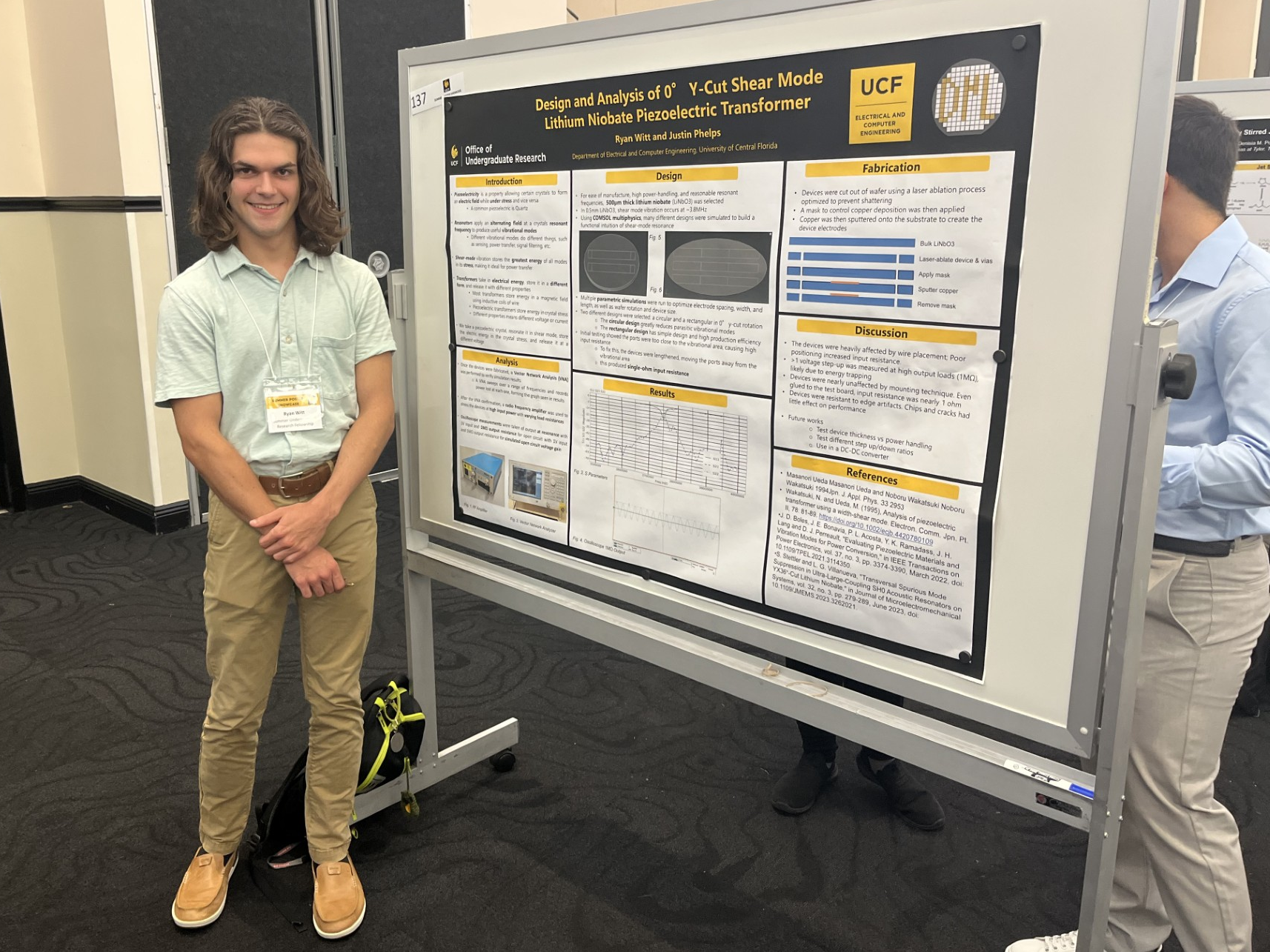
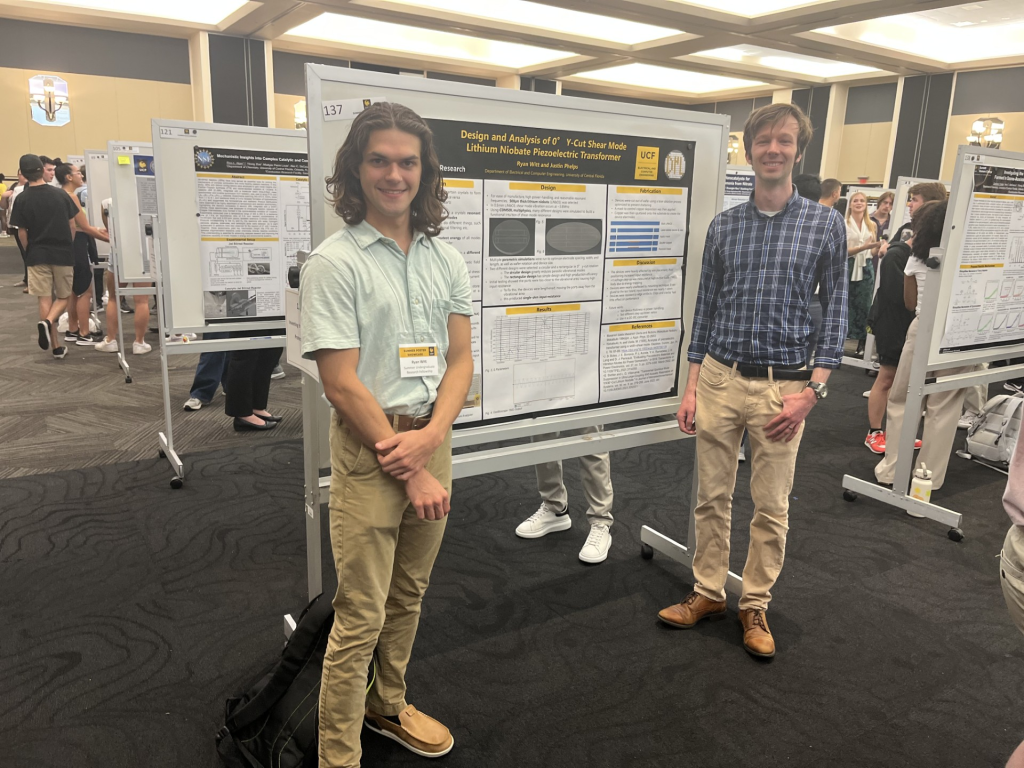
DML’s undergraduate research assistant, Ryan Witt, had the opportunity to be apart of the University of Central Florida’s Summer Undergraduate Research Fellowship (SURF). This is a scholarship program that introduces and supports undergraduates as they explore research in their fields. The selection committee required a research proposal, resume, cover letter, and faculty endorsement. After being notified of his acceptance in Spring 2025, Ryan worked closely with DML’s Dr. Phelps to work on a high-power piezoelectric transformer over the summer while learning a variety of skill in our lab like COMSOL, laser etching, and clean room techniques.

Learn more about Ryan’s project through his abstract here:

Shear-mode vibration has demonstrated the highest figure of merit for high efficiency, high-power-density devices compared to all other tested modes for power conversion applications (Boles et al. 2022). Lithium niobate (LiNbO3) has a 154 times greater mechanical Q and 25 times greater electrical Q than lead zirconium titanate (PZT) which is relevant to efficiency factors (Norgard 2016). This work aims to present the design, simulation, and experimental validation of a transformer that implements the shear-mode vibration on a 0° Y-cut LiNbO3 using MEMS fabrication techniques. Utilizing a 1 centimeter diameter circular design to limit the strength of spurious modes and a wide-gap electrode layout for maximum output voltage, the proposed device was simulated in COMSOL to determine the optimal electrode sizing and spacing. A micron scale pulsed carbon dioxide laser was used to cut the design from a 4-inch LiNbO3 mono-crystal wafer, before then depositing a 250 nanometer thick layer of copper through magnetron sputtering. The device was bonded to a laser-etched Rogers board and device electrodes were wire-bonded to the input and output ports. To characterize device performance, measurements of s-parameters, open circuit voltage, output load, and input resistance were taken. Power density and efficiency calculations were then conducted to produce useful quality metrics for analysis. 

The culmination of his work came during the SURF Showcase this past summer on July 18th, where he presented his poster entitled, “Design and Analysis of 0° Y-Cut Lithium Niobate Piezoelectric Transformer”. Congratulations to Ryan and we look forward to his further progress in our lab, as he continues his undergraduate research career with us.

Categories
Research Updates

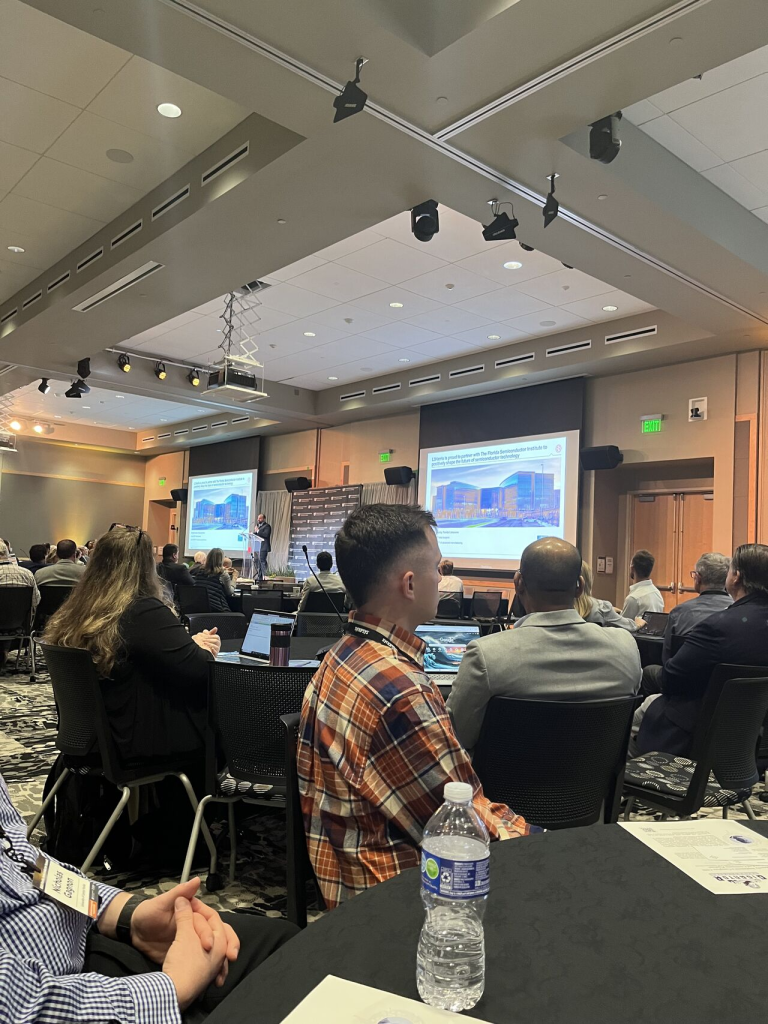
Semiconductor Summit 2025

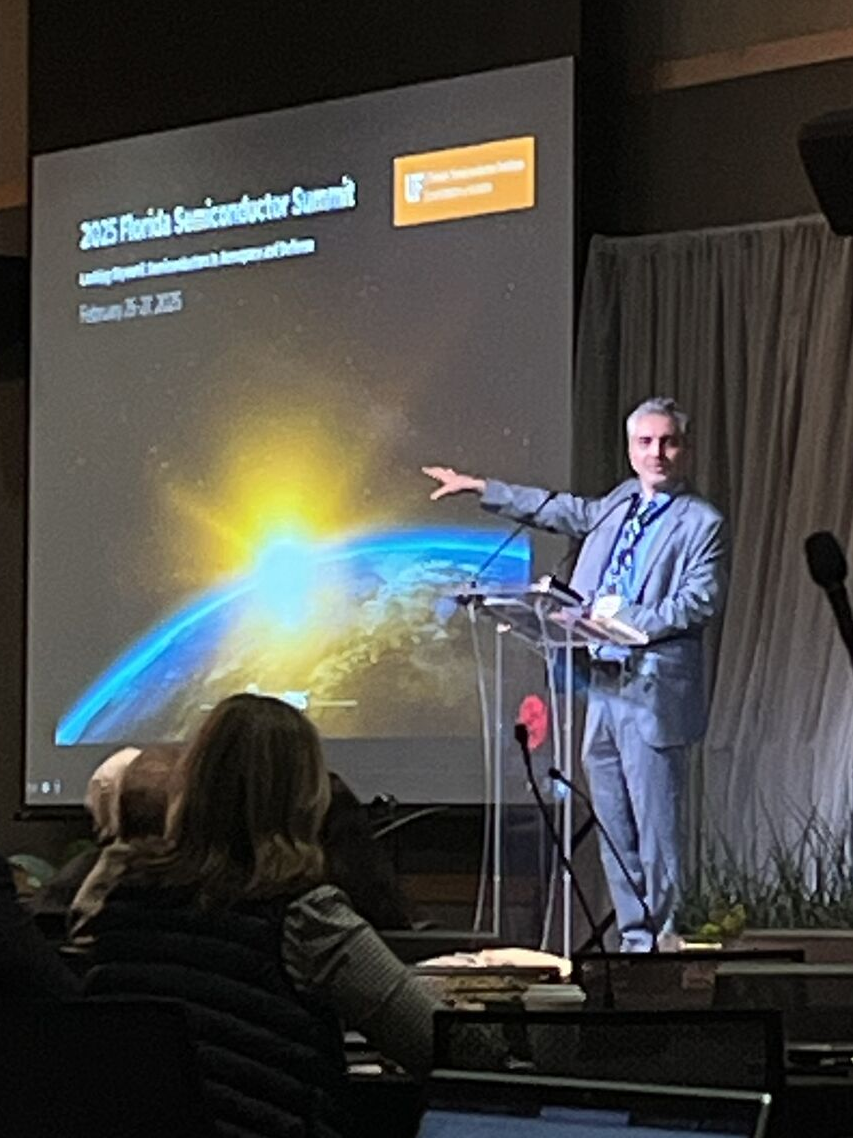
Hosted at the L3Harris High Technology Center and led by UF’s Dr. Yoon and our ECE Chair and P.I., Dr. Abdolvand (pictured below) this past February, the Summit was a great learning opportunity for our DML undergraduates, Zion and Kat.


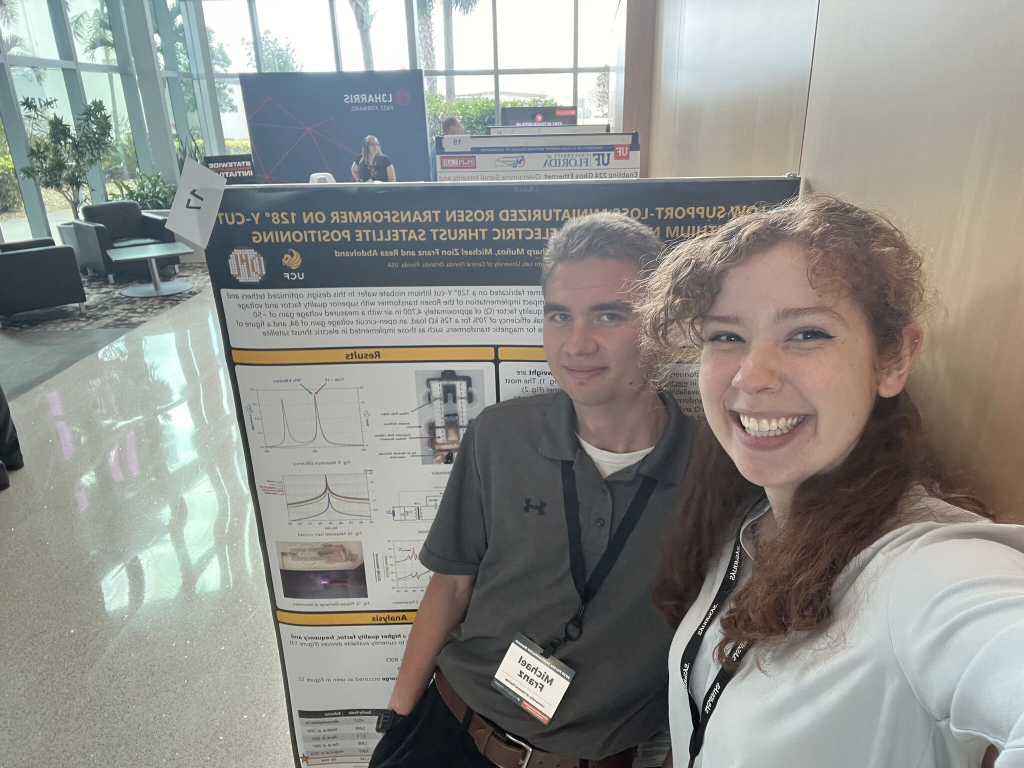
At the summit, our students presented the poster titled “Low Support-Loss Miniaturized Rosen Transformer on 128° Y-Cut Lithium Niobate For Electric Thrust Satellite Positioning” to industry professionals from Synopsis, NASA, and L3Harris. The experiences and insights learned about for their application for the Summit’s defense and aerospace theme were incredibly insightful. This project was a culmination of skills our students learned in Fall 2024 with the support of Dr. Phelps.


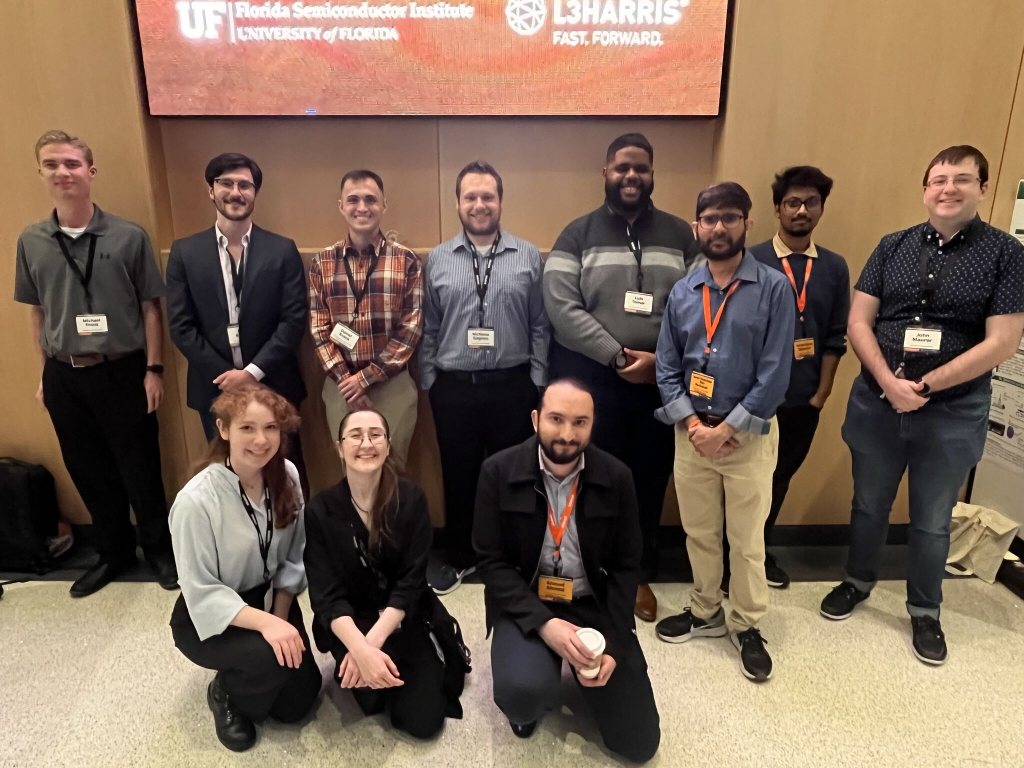
Connecting with graduate students from USF, as well as fellow undergraduates from the UCF Material Science and Electrical and Computer Engineering Departments, provided a fascinating exchange of discoveries in biomedical applications, software, etc. Our undergraduates had a great time meeting everyone, hearing their research experiences, and discoveries!


Keynote speakers such as Dana Weinstein shared inspiring stories about their experiences and shed light on the national strategy for microelectronics R&D, including initiatives like CHIPS. Her work specifically at the public policy level and in MEMS fabrication for robotics was both enlightening and motivating for our students.


Further, engaging with attendees from the public school district during lunch offered a refreshing perspective on strengthening our education system and workforce for the semiconductor industry. It was enriching to be part of discussions aimed at building a robust foundation for our society’s future in this sector.

Read more from the research poster presented here: